Laser scanning technology is helping usher in a new era of realism in video games
Video games have the power to transport players anywhere. From the icy tundra of Ancient China in Game Science’s Black Myth: Wukong to the sweeping desert dunes in Turn Ten’s Forza Motorsport. And even traversing a galaxy far, far away in EA’s Star Wars sagas.
With 3D laser scanning technology, video games are getting ever more real and immersive.
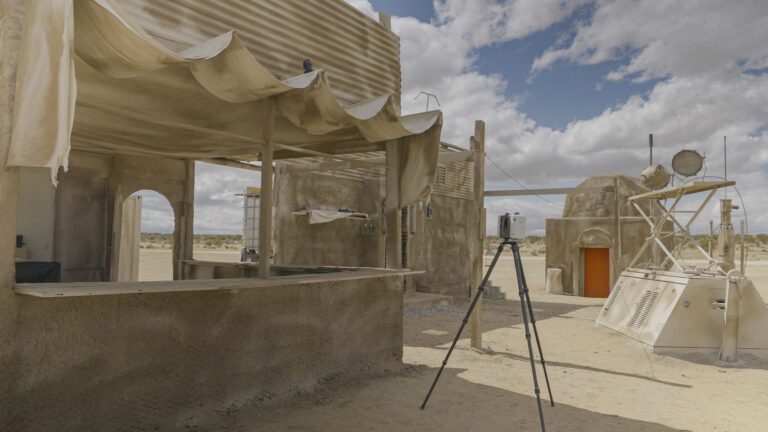
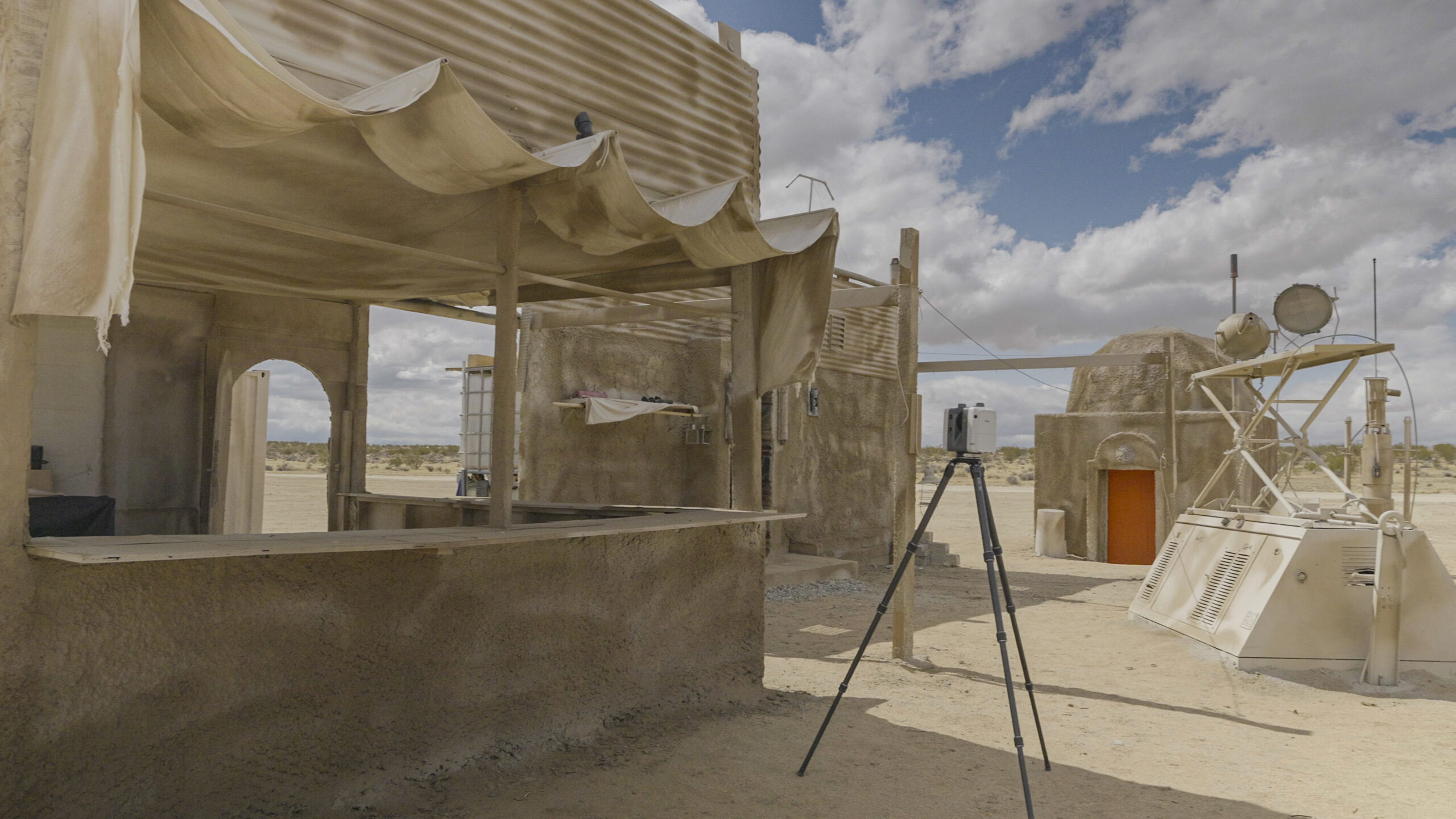
Capturing real-world elements like the topography of environments around the world, the scale of buildings and structures, and the details of millions of objects ranging in size, 3D laser scanners have been capturing real-world data with millimeter accuracy.
Laser scanners provide the essential building blocks for game developers to speed up their workflows, gather reliable references, and mimic real-world movement.
Here are just a few mini-deep dives into the world of game development and how 3D laser scanners get development teams to that sweet creation spot faster.
Asset building: Scan it in
Assets in video games can take the form of pretty much anything, from objects like weapons to sounds to any gadget you find or hear while exploring a world or level in a game. The list of assets goes on.
With so many assets populating a scene in a game, ranging from uniformed assets like shrubbery and trees to technological clutter found in about every space odyssey, it’s up to the 3D modelers to break down what the asset looks like.
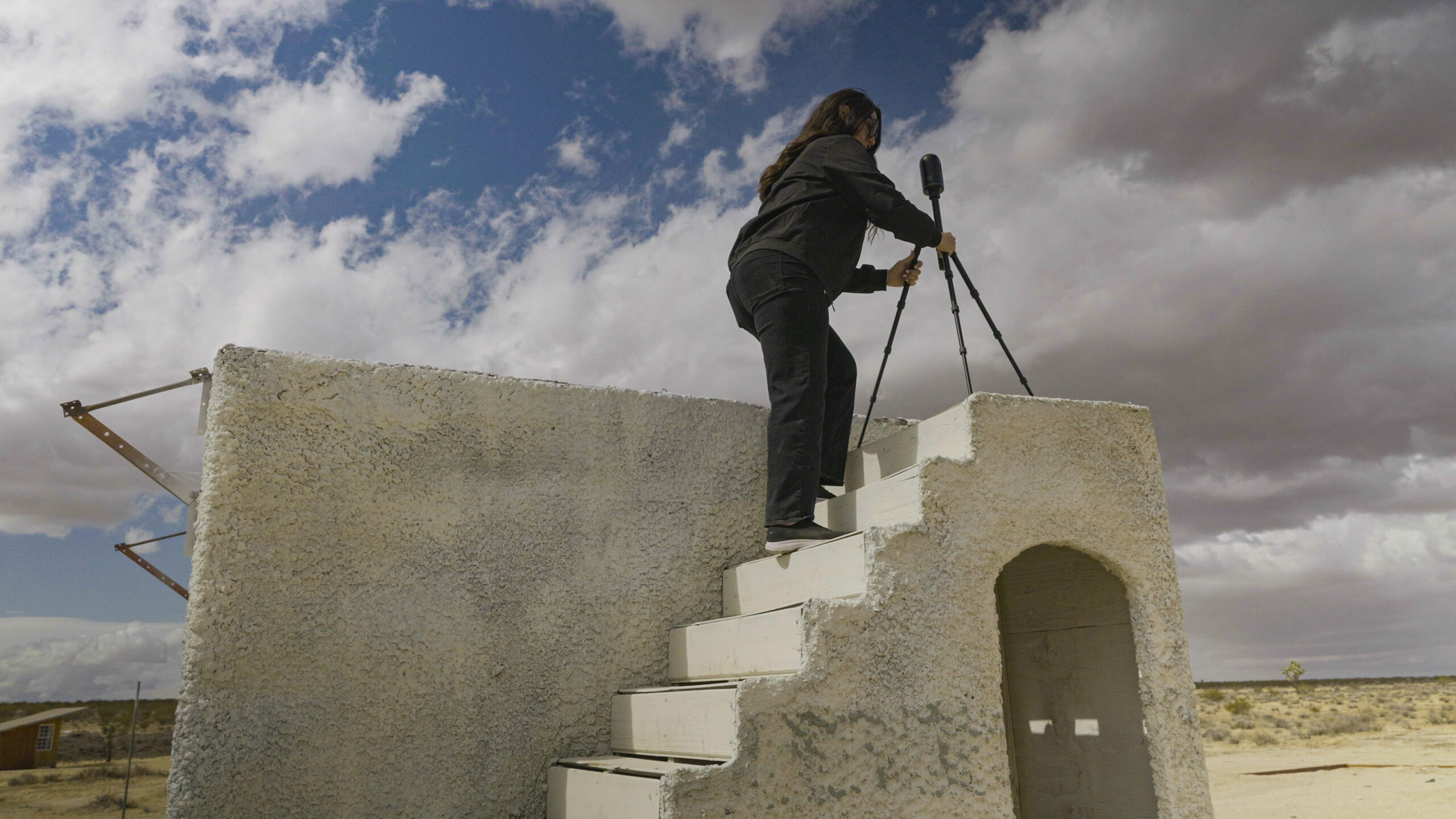
With 3D laser scanners like the Leica BLK360, game developers can scan an object or space, upload it to a chosen game engine, and model right on top of the 3D data of an asset. With the 3D scan data captured, 3D modelers have a head start on building assets to scale and reflecting the real-world details we’ve come to anticipate in games.
PBR materials: Reference in engine
Details like the rigid lines on sharply cut grass or the texture found on fabric can be modeled with the 3D data capture of these objects. Modelers can mimic these materials for the assets in the game using the 3D data as a direct reference.
Adding LiDAR data to the 3D modeler’s still imagery and video toolkit means modelers can examine the desired asset’s fine detail from all angles.
Modelers can zoom in as close as they need to and zoom out to assess size and scale. This amount of manipulation with real-life reference provides 3D artists with the details they need to replicate and create details as true to life as possible.
Gray box creation: Capture environments
Not all our favorite games are ultra-realistic. Sometimes, our favorites might be portal-jumping robots, raccoon thieves, or shell-shaded green tunic-wearing elves.
But the movement through the game is based on physics. As characters jump, run, and slide through stages and worlds, we rely on level design to make these movements look and feel real.
With 3D laser scanners, level designers working on the fundamentals of character movement in all forms can use the scan data of sets or real-world structures to create and sculpt the game environments we love.
As performers during mocap move through a space, interacting with different structures and objects, the LiDAR data capture of these greenscreen elements means level designers and environment artists can create environments and assets to scale.
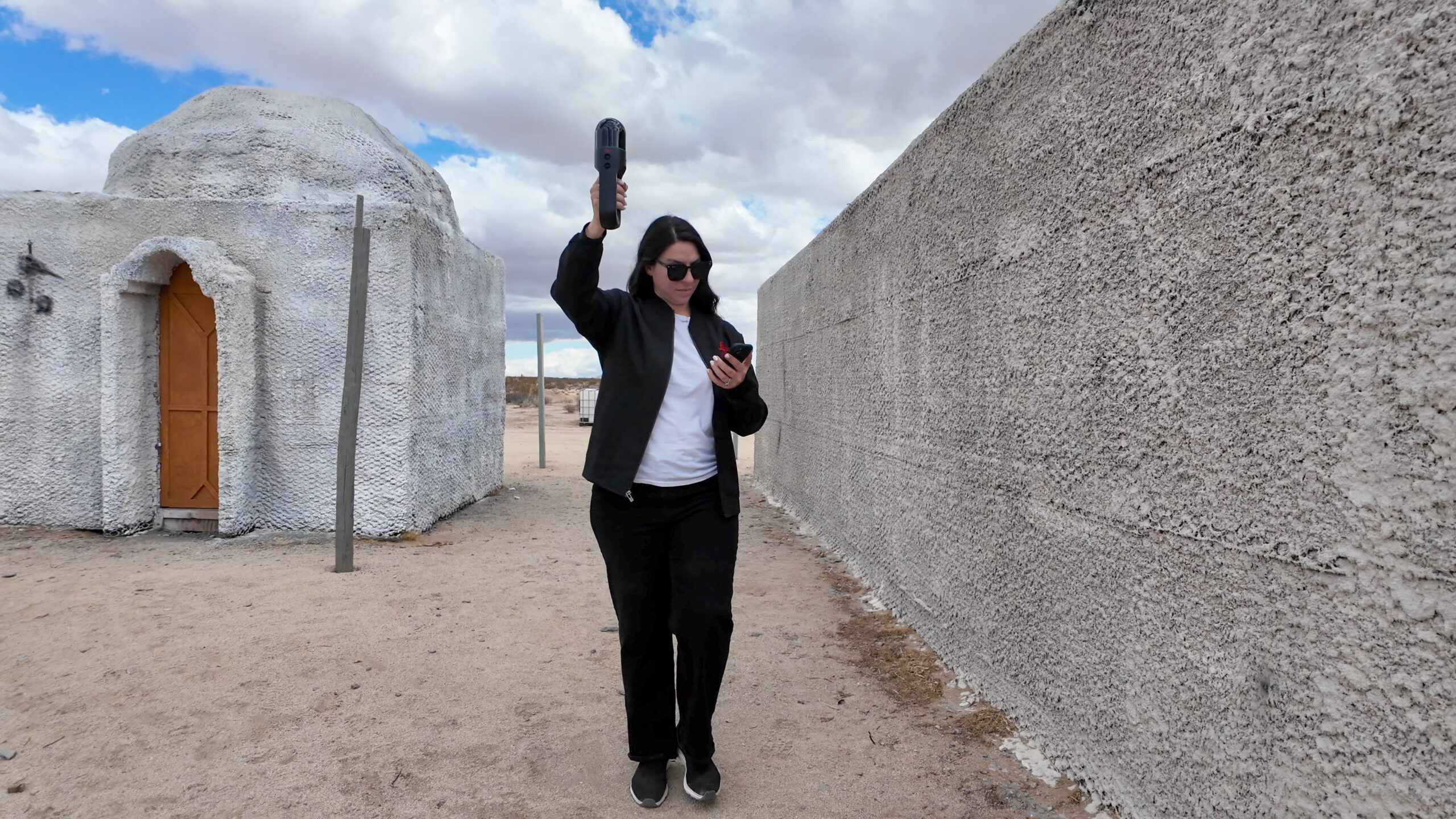
And with laser scanners like the Leica BLK2GO, game developers can walk through a space and capture its layout and elements like doorways, hallways, and stairs, and then upload the data to their preferred game engine to get to work planning out how characters/players in levels should move and how the game environment should look.
Scene levels: Pre-vis with scan data
With scan data, game development teams gain an early view of environments. Teams from different departments can use the 3D data to fly through and view where and what to mark out as visually important landmarks, objects, and scenes.
Everyone with access to the data can view the point cloud for a previsualization of the possible scope for a level or scene.
And when it comes to those cinematic scenes, flythroughs of the data allow game directors and cinematic teams to do just that, searching and marking out the best camera shots with the potential to deliver the most impact in a game’s story.
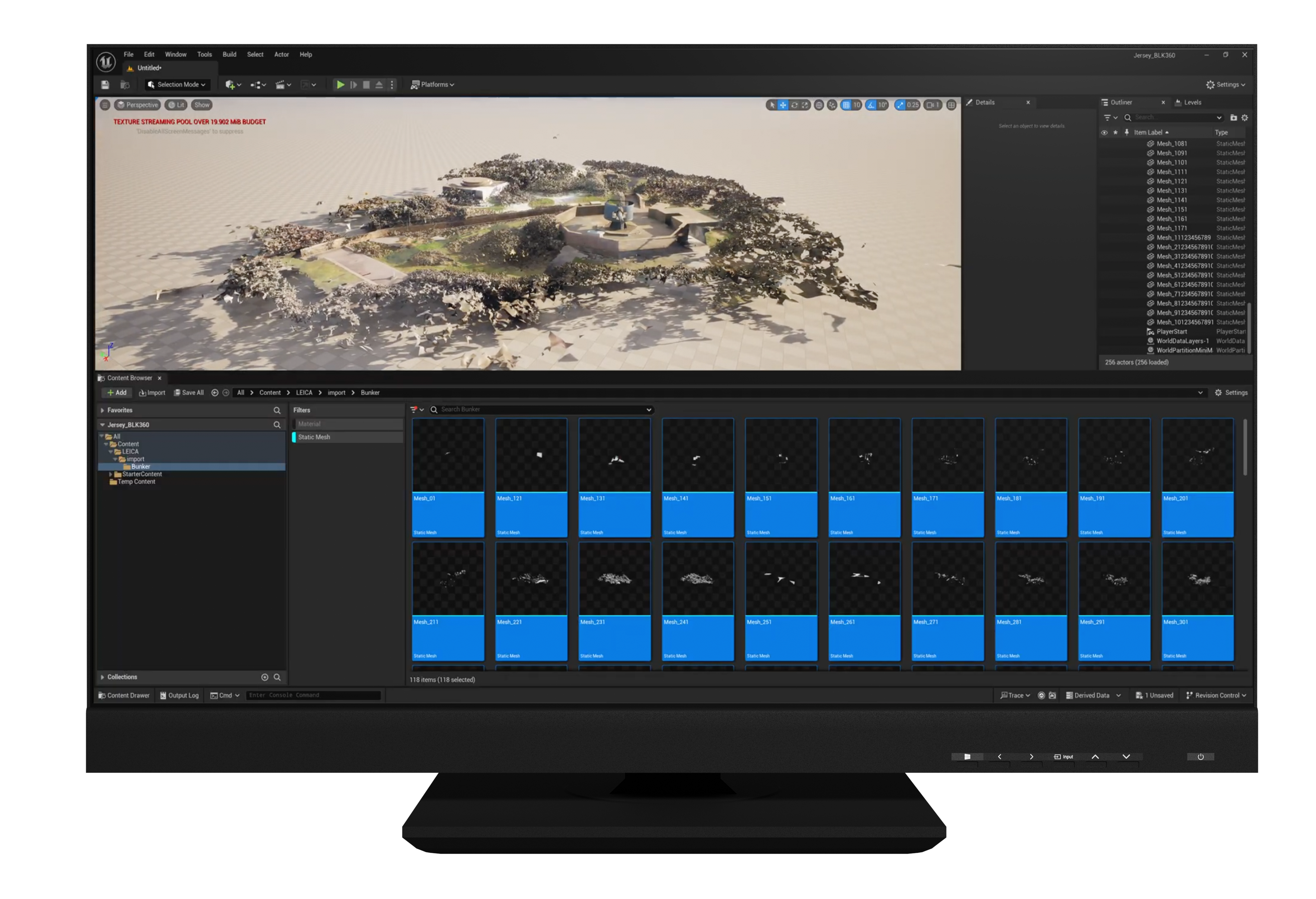
Color correcting: 3D data in color
Once the concept for the game has been established, aligning all departments on the look and feel of the game can be a challenge.
An element often discussed early on in development is color, which has the power to set the tone and create the atmosphere for any game.
With the Leica Geosystems’ range of scanners, game developers can upload fully colorized scan data to their game engines and use the data as reference for technical artists get to work straight away to match the colors of assets to their real-world counterparts accurately.
3D LiDAR lasers can fuel the creative network that makes up the gaming development world – from concept artists to technical artists to modelers, art directors, and creative leads. With 3D reality capture data, all team members across a studio can access and visualize what they need to do their best work.