Saving 'Ms. Blue'
What happens when a blue whale skeleton is subjected to humidity, sunlight, wind, and rain?
In a couple of decades, it might begin to deteriorate and no longer be safe for visitors to view.
Ms. Blue, a blue whale skeleton at the UC Santa Cruz Seymour Marine Discovery Center, has been on display for over twenty years, but in 2024, the skeleton had to be removed from display due to safety concerns.
Cue Halon Entertainment, a visualization and animation studio that also specializes in bringing virtual production experiences to audiences around the globe. They teamed up with UC Santa Cruz Seymour Center in a quest to digitally rectify and reconstruct the skeleton with the Leica RTC360.
Educating audiences digitally
The Marine Discovery Center decided to digitally capture Ms. Blue so that while the skeleton is down for repairs, visitors can view the skeleton digitally – expanding the audience from locals to all interested persons outside of the Santa Cruz area.
And the partnership between Seymour Marine Discovery Center and Halon didn’t just stop there.
The team not only scanned the massive skeleton but also transformed the captured scan data of the whale skeleton into a 3D mobile educational and interactive app.
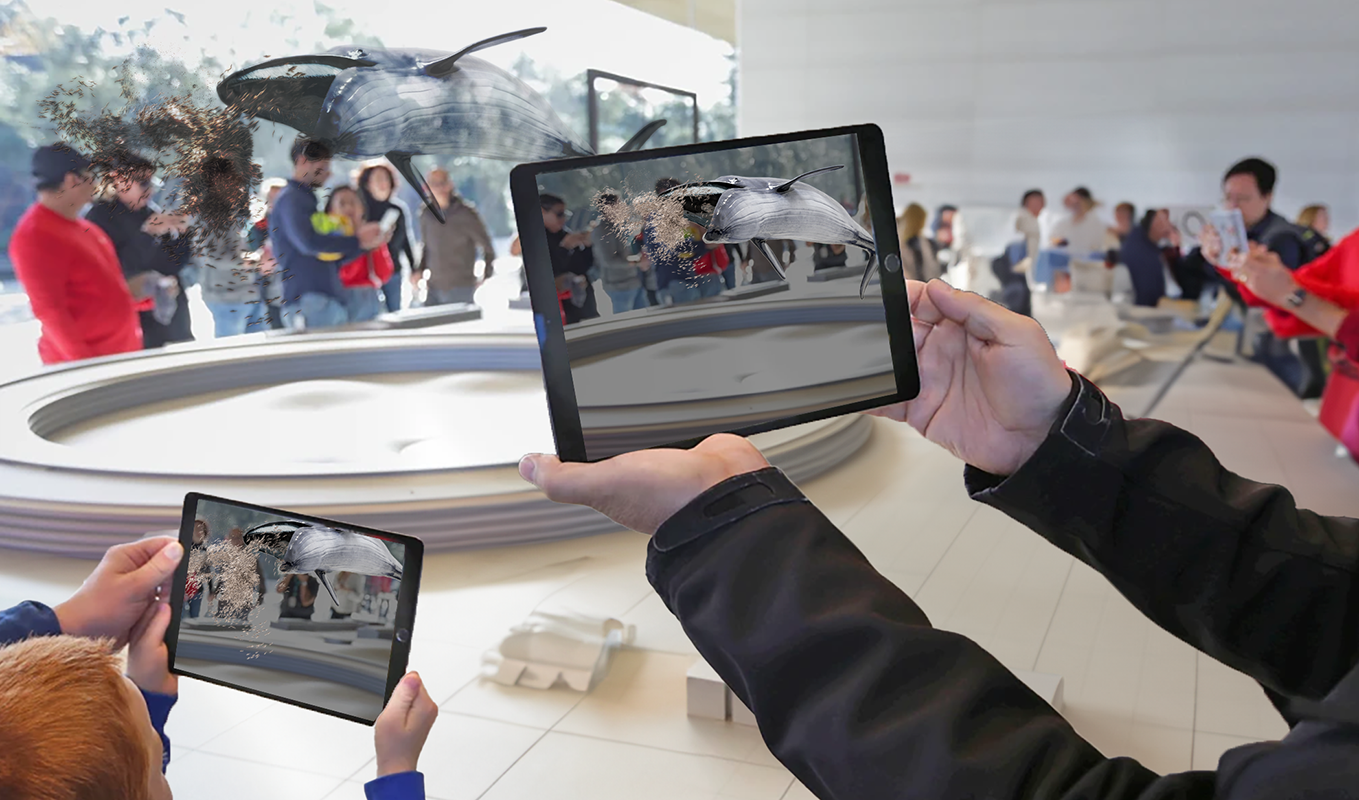
Now, anyone can view Ms. Blue up close and digitally. The app comes complete with AR elements to show just how massive blue whales are, their feeding habits, their influence on the biodiversity of oceans, and their movements throughout the sea.

Scanning a blue whale skeleton with the Leica RTC360
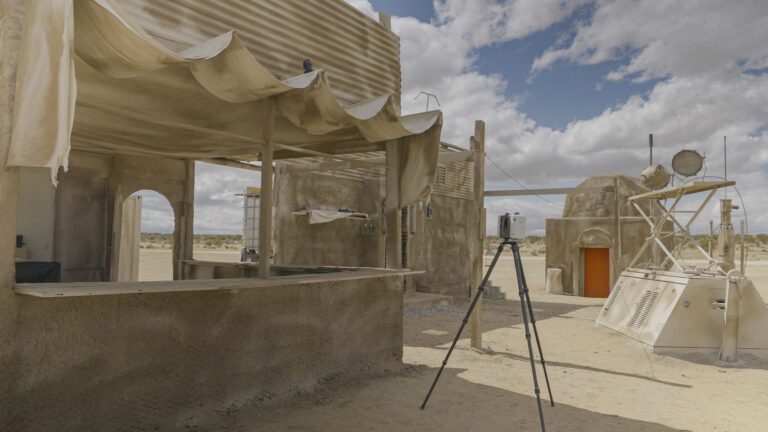
When Halon Entertainment got to work, they turned to the RTC360 for reliable scanning.
With a goal to educate and help visitors visualize blue whales and their lives under the sea, Jess Marley, Halon Senior VAD Supervisor, said, “Capturing the data of Ms. Blue with the RTC360 allowed us to connect our expertise in film, gaming, and animation with something so culturally specific to the Santa Cruz area while also scientifically important to our earth.”
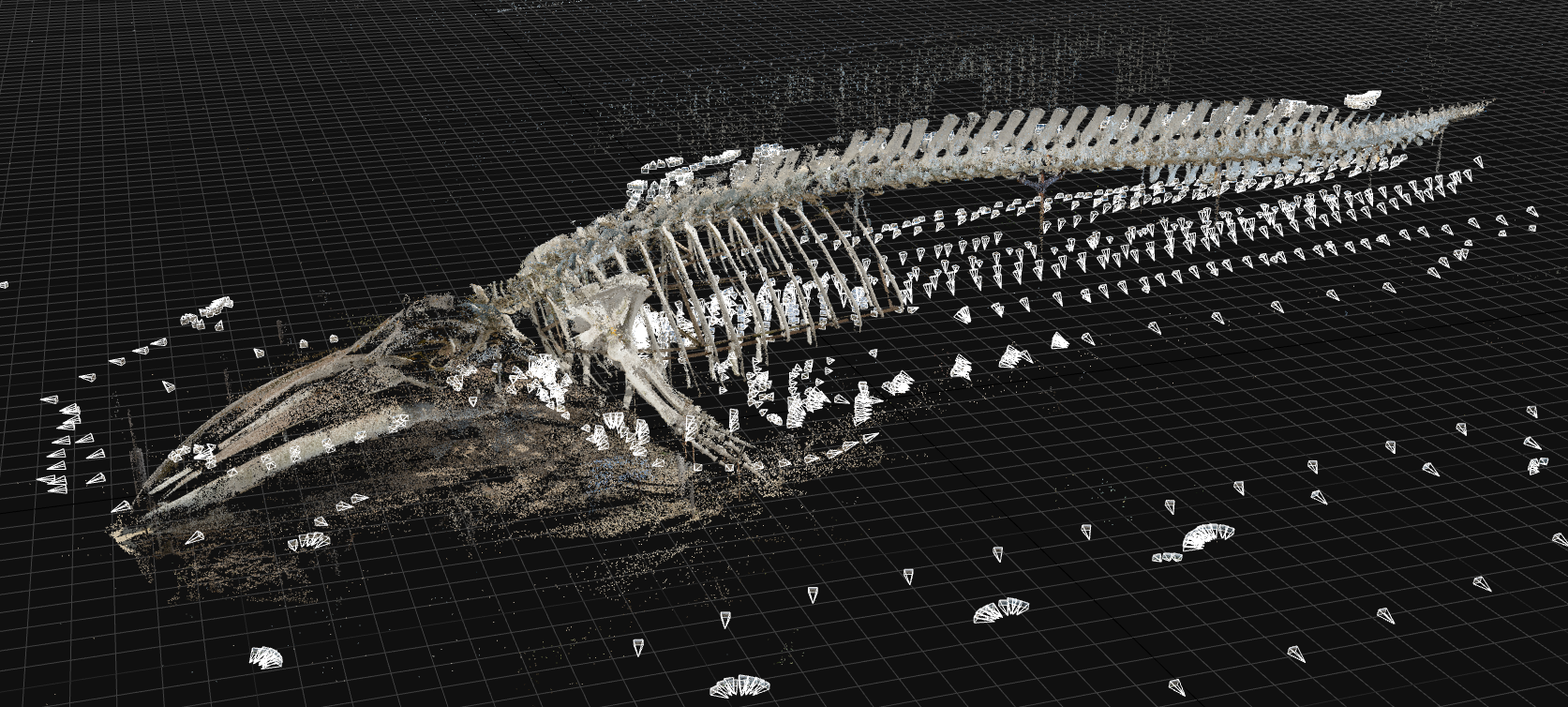

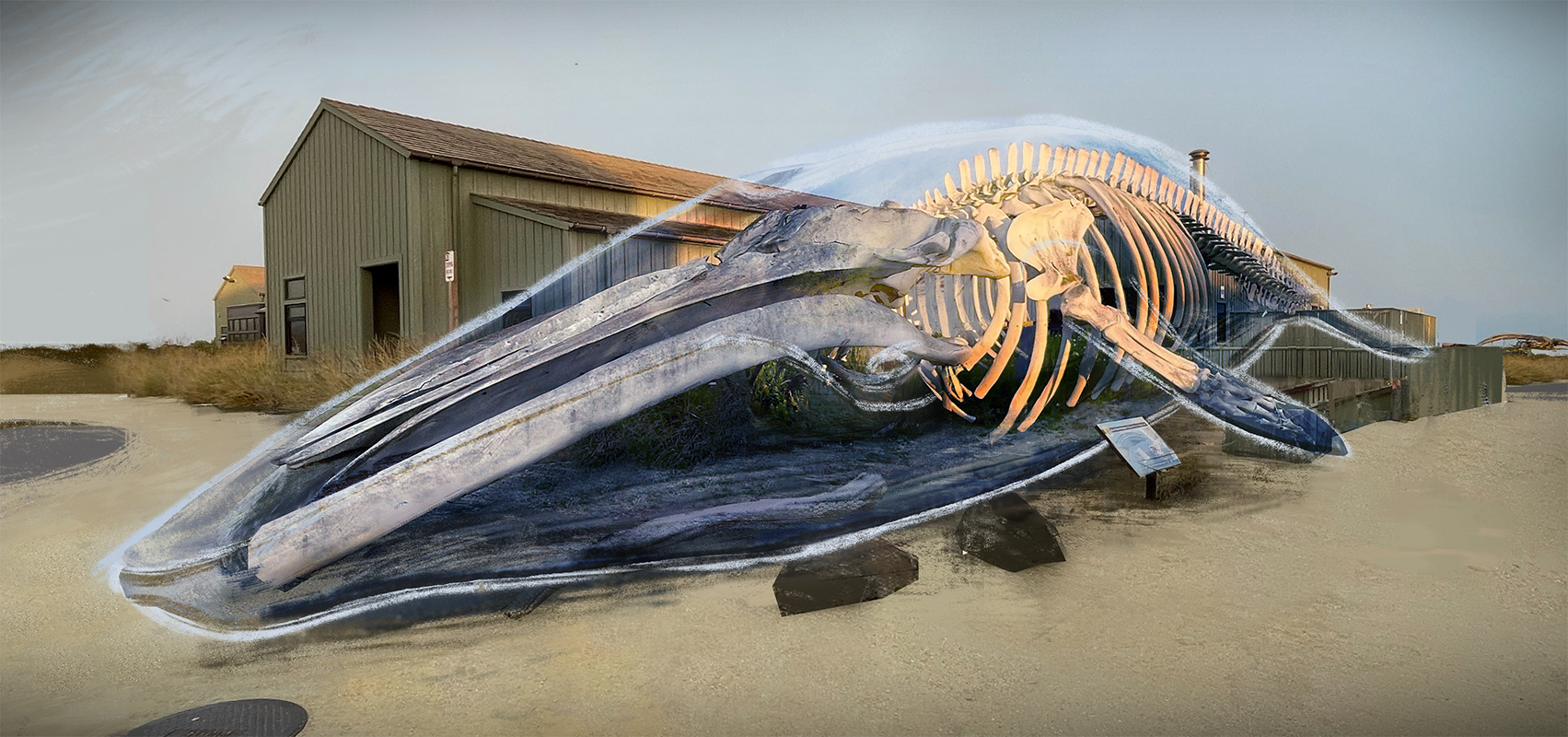
Marley continued, “With the RTC360 data we could capture accurately the bone and skeleton structure of Ms. Blue in detail, and later upload the data to our programs to animate and add flesh and educate audiences on the intricacies of these beautiful creatures – down to how their tongues move when digesting hordes of fish!”

From scan data to app implementation
The Halon team, utilizing their expertise on premier films, gave us the breakdown on how they took over fifty scans captured with the RTC360 and delivered the digital reconstruction of Ms. Blue for visitors to enjoy.
Bringing Ms. Blue back to life digitally involved the Halon team utilizing a suite of software:
- Using Leica Cyclone REGISTER 360 PLUS the team could align the scans, review specific scan data, and view the colorized point cloud of Ms. Blue.
- With the software ZBrush and the Substance Painter, the team got to work digitally sculpting, modeling, and accurately coloring the whale and adding skin and muscle effects to the model.
- Halon artists then transferred Ms. Blue’s 3D model to Autodesk Maya for reconfiguration and repositioning, and the team began accurately animating her blue whale movements.
- After creating, sculpting, and animating the 3D model, the team uploaded it to Unity. In the game engine, Halon created a realistic natural environment for Ms. Blue to move in and mimic her life under the sea.
Through a QR code available in the museum and accessible on their website, viewers can now download the app, take photos with Ms. Blue, pose with her in different areas in the museum, and explore the life of a blue whale in a recreated digital environment.
Want to learn more about how LiDAR scanning can be a tool for you? Get in touch with us here.